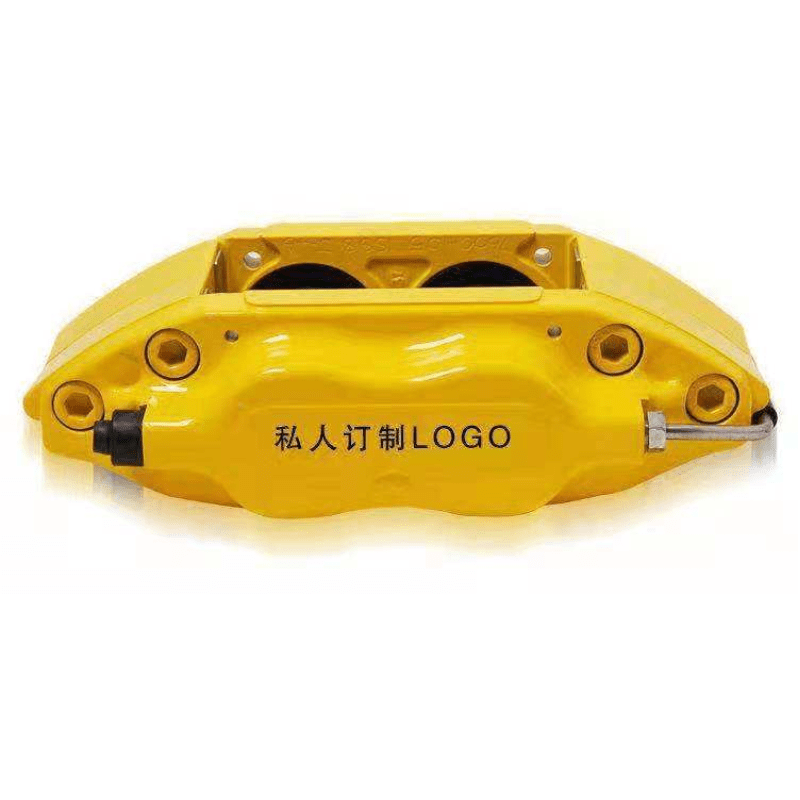
Brake Caliper Technology, Performance Braking & Buyer Guides
The global automotive aftermarket continues to grow rapidly, particularly in the performance upgrade sector. Automotive distributors, racing teams, and tuning companies are increasingly sourcing performance brake calipers, big brake kits, and custom brake systems to improve vehicle safety and driving performance.
This brake caliper blog provides engineering insights, buyer guides, and real-world development cases covering modern braking technologies, manufacturing processes, and supplier selection strategies for the global automotive industry.
Automotive Performance Brake Market Insights
- Performance brake upgrades continue to grow within the global automotive aftermarket.
- Multi-piston brake calipers improve clamping force and braking stability.
- Forged aluminum brake calipers reduce weight while increasing strength.
- Many automotive distributors are developing private-label brake brands.
- High performance braking systems are increasingly used in tuning and motorsport markets.

Understanding Performance Brake Calipers
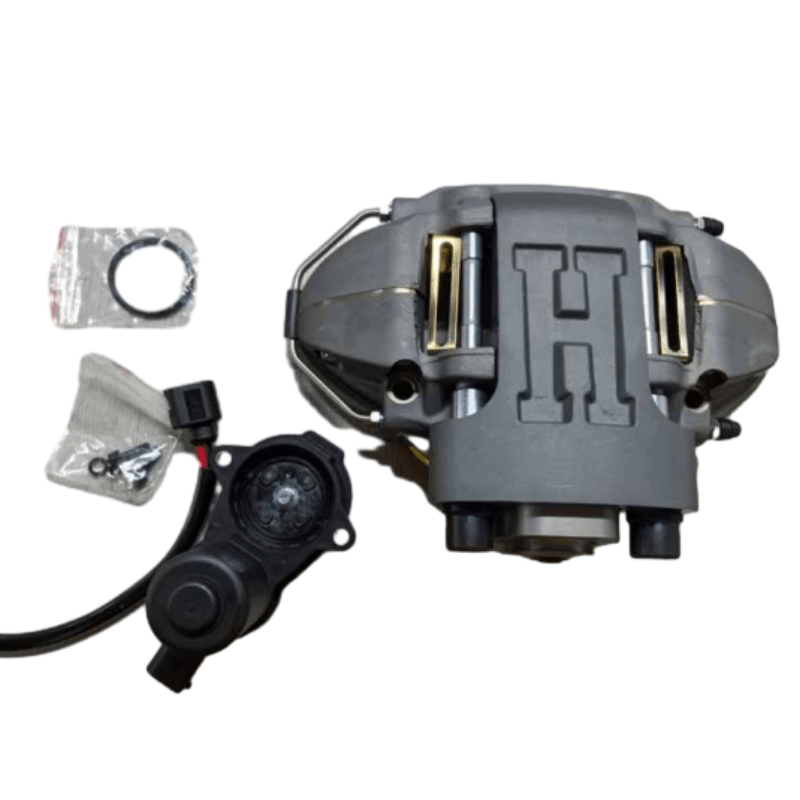
A brake caliper converts hydraulic pressure into mechanical clamping force. When the driver presses the brake pedal, hydraulic fluid pushes pistons inside the caliper, forcing brake pads against the brake rotor.
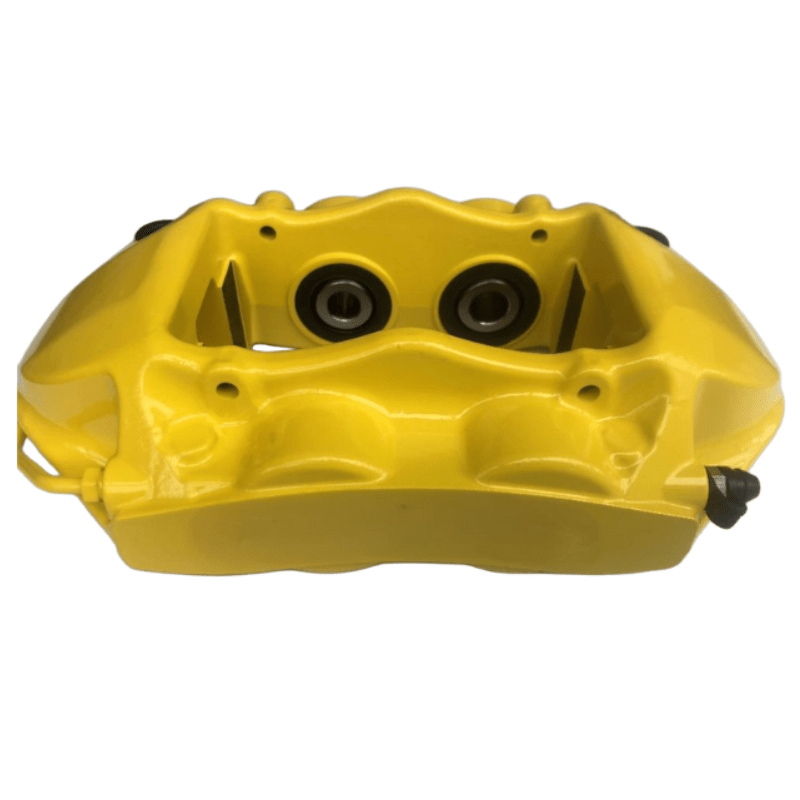
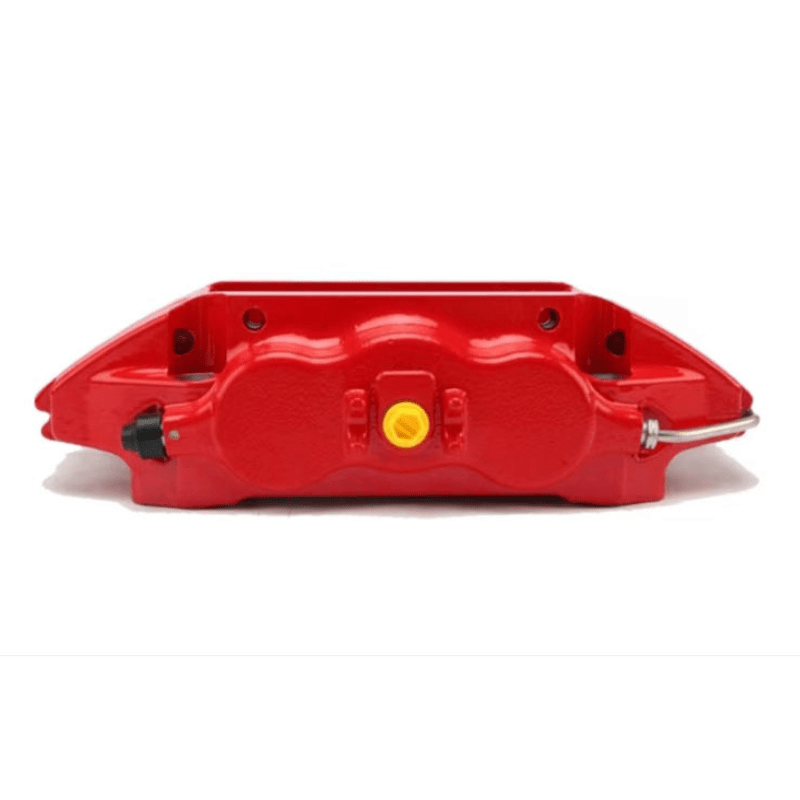
Modern performance cars often use fixed multi-piston brake calipers rather than traditional floating calipers. Multi-piston designs distribute braking pressure more evenly across the brake pads, improving braking stability and reducing brake fade during aggressive driving.
If you want to explore how braking systems are selected for high-performance vehicles, our guide on best brake calipers for performance cars explains the most popular configurations used by performance car builders.
Key Advantages of Performance Brake Calipers
- Stronger clamping force and braking power
- Improved heat dissipation under heavy braking
- Reduced brake fade during high-speed driving
- Better brake modulation and pedal feel
- Higher structural rigidity compared with standard OEM calipers
Multi-Piston Brake Calipers Explained
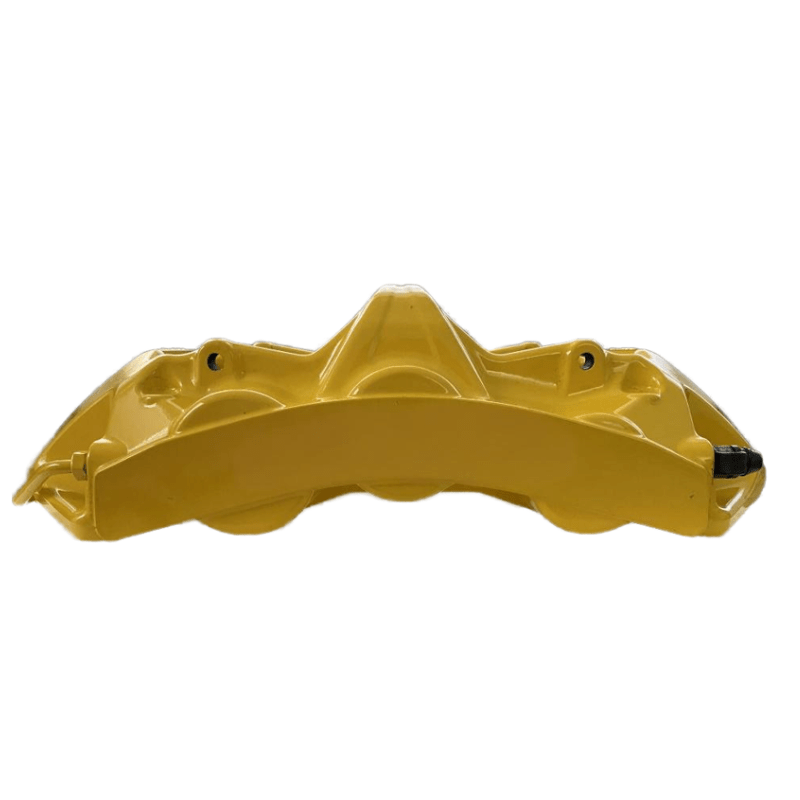
High-performance braking systems frequently use four-piston, six-piston, or even eight-piston calipers. Increasing the number of pistons allows braking force to be distributed more evenly across the brake pad surface.
This design improves braking efficiency while reducing uneven pad wear and improving rotor contact stability.
Our engineering comparison of 4 piston vs 6 piston brake calipers explains how piston configuration influences braking power and thermal performance. 
Forged vs Cast Brake Calipers
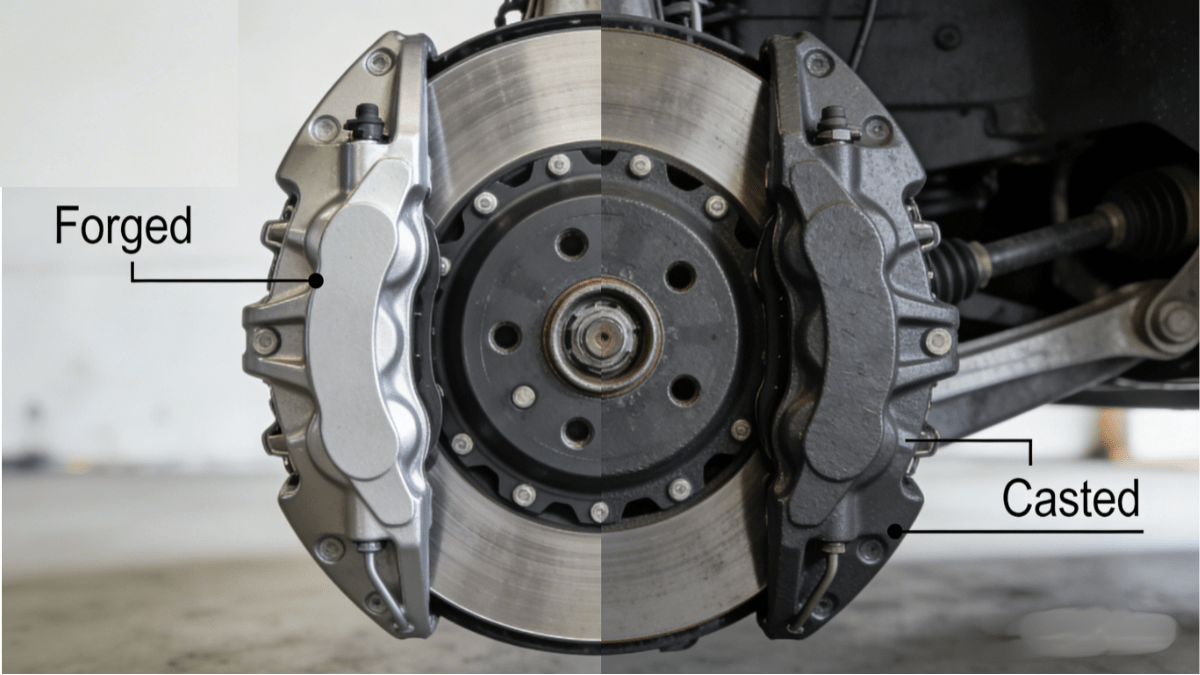
Brake calipers can be produced using several manufacturing methods, but the two most common approaches are casting and forging.
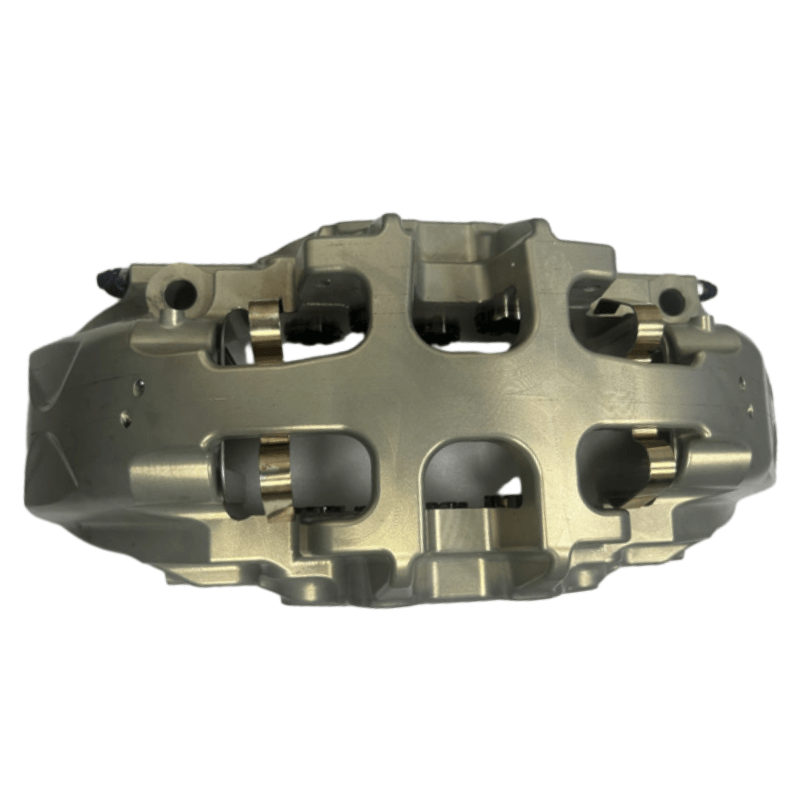
Forged aluminum brake calipers are widely used in high-performance braking systems because forging produces a denser metal structure with higher mechanical strength and improved resistance to deformation.
Forged calipers also reduce unsprung weight, which helps improve vehicle handling and suspension response.
Learn more in our comparison of forged vs cast brake calipers.
OEM Brake Calipers vs Aftermarket Performance Calipers
Automotive distributors often evaluate both OEM and aftermarket brake components when developing their product portfolios.
OEM brake calipers are designed primarily for reliability and cost efficiency in standard vehicles. Aftermarket performance calipers focus on improved heat dissipation and stronger braking response.
Our guide on OEM vs aftermarket brake calipers explains the engineering and market differences between these braking solutions.

Brake Caliper Buyer Considerations
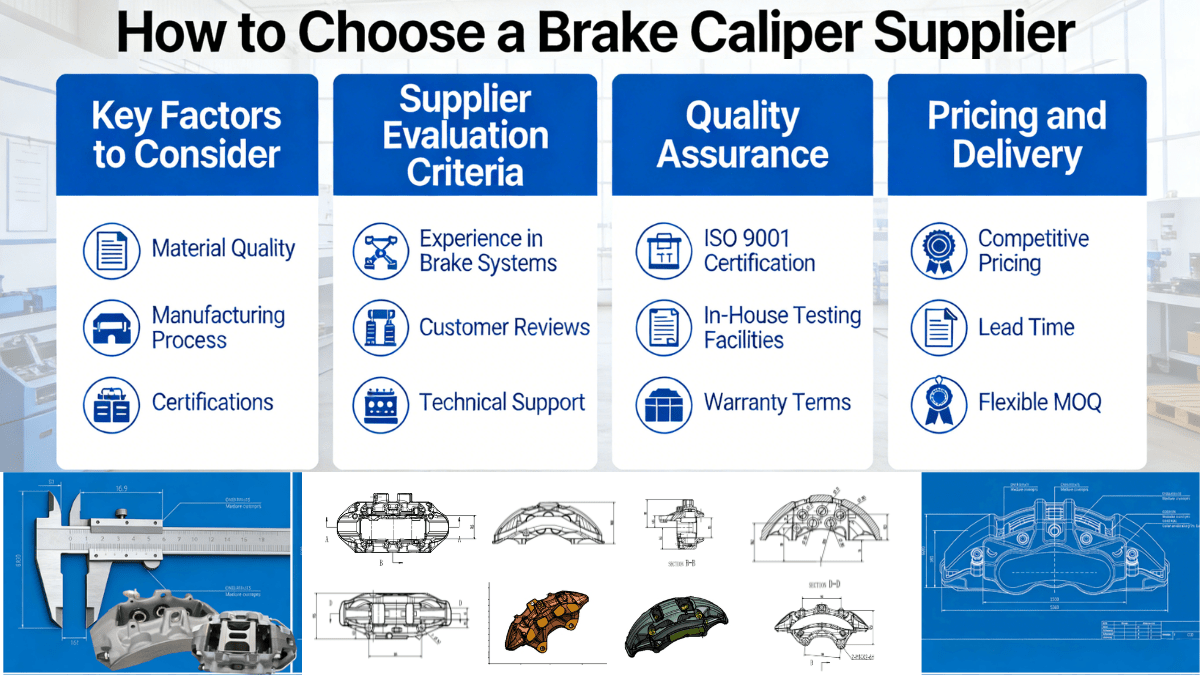
When automotive distributors or performance brands select a brake caliper manufacturer, they typically evaluate several key factors:
- Engineering and product development capability
- Manufacturing quality control systems
- Availability of OEM and private label services
- Stable production capacity and supply chain reliability
- Experience in performance braking system development
If you are sourcing brake components globally, our guide on how to choose a brake caliper supplier explains how professional buyers evaluate manufacturers.
Brake Caliper Knowledge Hub
To help automotive professionals better understand modern braking technologies, we have developed a comprehensive knowledge hub covering brake engineering, product selection strategies, and real-world development cases.
These resources provide valuable insights for automotive distributors, tuning companies, motorsport teams, and performance parts retailers seeking reliable brake component suppliers.
Brake Caliper Buyer Guides
- Best Brake Calipers for Performance Cars
- Forged vs Cast Brake Calipers
- 4 Piston vs 6 Piston Brake Calipers
- OEM vs Aftermarket Brake Calipers
- How to Choose a Brake Caliper Supplier
- Brake Caliper Manufacturing Process
Brake Caliper Development Case Studies
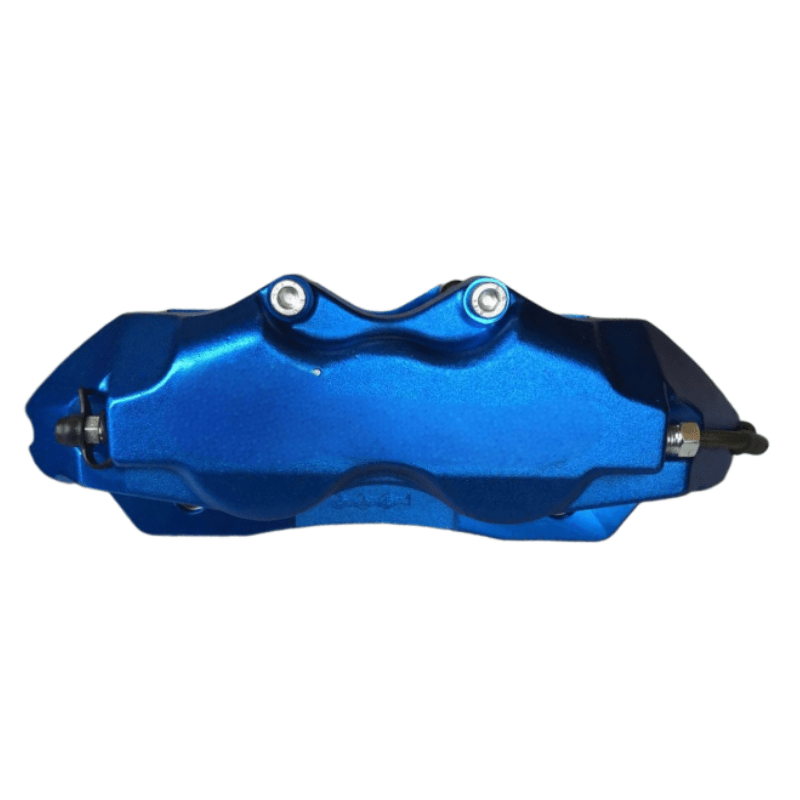
- Custom Color Anodized Brake Calipers
- Big Brake Kit Development Case Study
- Private Label Brake Caliper Service
- OEM Brake Caliper Manufacturing
- Custom Brake Caliper Project
Explore Brake Caliper Products
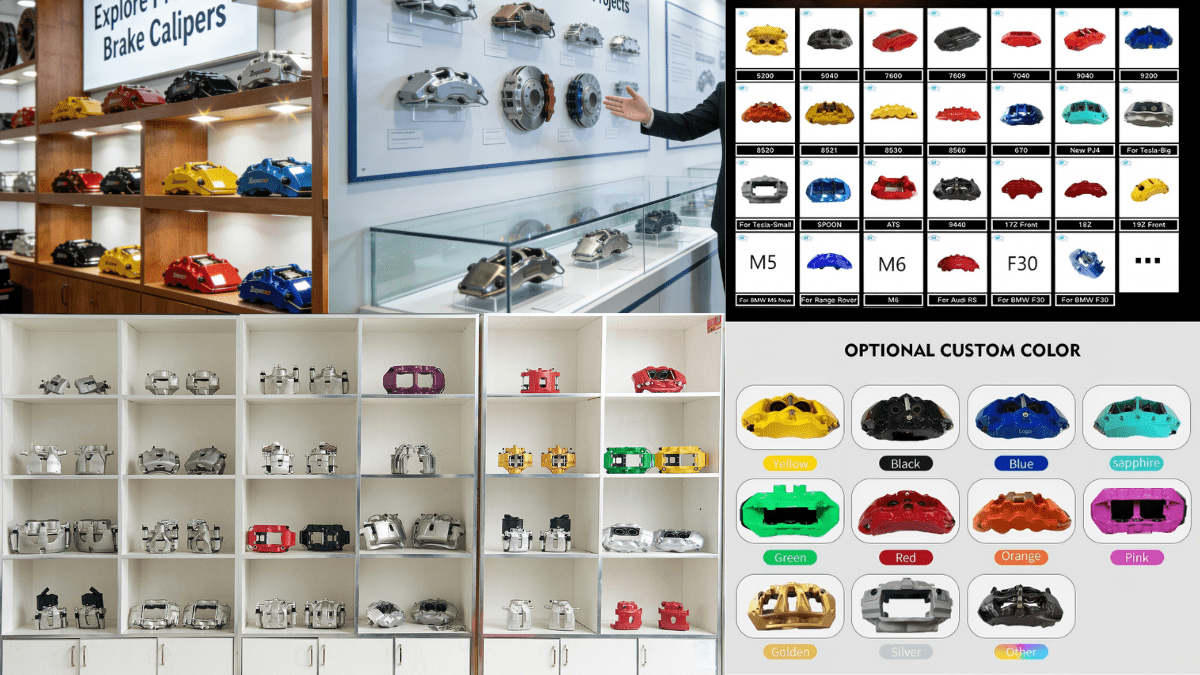
If you are sourcing braking components for automotive distribution or performance upgrades, you can explore our product catalog.
Our race brake calipers are designed for motorsport and performance vehicles.
For replacement markets we also supply OEM brake calipers.
Looking for a Reliable Brake Caliper Manufacturer?
We supply high-performance brake calipers, big brake kits, and OEM brake components for automotive distributors and performance brands worldwide.
Request a Quote