Brake Caliper Technology Knowledge Center
Brake caliper technology plays a fundamental role in modern vehicle braking systems. As automotive performance standards continue to rise, braking components must provide greater structural strength, improved heat management, and consistent braking stability under extreme operating conditions. For automotive distributors, performance parts brands, and vehicle manufacturers, understanding brake caliper engineering is essential when evaluating braking products or developing new brake systems.
This knowledge center focuses on the key technologies behind modern brake caliper design and production. The articles in this section explore engineering concepts such as caliper structural rigidity, heat dissipation efficiency, piston configuration, and manufacturing methods. These topics help automotive professionals better understand how high-performance brake calipers are designed and produced.
If you are sourcing brake components, developing a performance brake kit, or evaluating brake caliper suppliers, the following technical resources can provide valuable insight into braking system engineering and manufacturing standards.
Brake Caliper Structural Design and Rigidity
Structural rigidity is one of the most important engineering considerations in brake caliper design. During heavy braking, hydraulic pressure inside the braking system increases significantly. If the caliper housing flexes under pressure, the braking force applied to the brake pads can become uneven, which may reduce braking efficiency and negatively affect pedal feel.
To prevent structural deformation, high-performance brake calipers often incorporate reinforced bridge designs, optimized internal geometry, and high-strength aluminum alloys. Forged aluminum brake calipers in particular offer superior mechanical strength compared with conventional cast components. These structural improvements help ensure that hydraulic pressure is transferred efficiently from the braking system to the brake pads.
A more detailed engineering explanation can be found in the following article:
Brake Caliper Structural Rigidity and Strength

Heat Dissipation and Brake System Thermal Management
Heat management is another critical factor in braking system performance. When brake pads clamp the brake rotor during deceleration, friction generates significant thermal energy. Without effective heat dissipation, braking performance can deteriorate due to brake fade, reduced friction efficiency, or overheating of brake fluid.
Modern performance brake calipers are designed to improve thermal stability by optimizing piston arrangement, improving airflow around the brake assembly, and using heat-resistant internal seals. Multi-piston brake calipers also help distribute braking force evenly across the brake pads, which reduces localized heat concentration and improves thermal balance across the braking system.
For a deeper technical discussion of brake cooling strategies and thermal control design, see:
Brake Caliper Heat Dissipation Technology
Piston Configuration and Hydraulic Braking Performance
Brake caliper piston configuration directly influences braking pressure distribution and pedal responsiveness. While many standard passenger vehicles use single-piston calipers, performance vehicles often utilize multi-piston brake calipers to achieve better braking balance and improved pad contact with the brake rotor.
Multi-piston calipers allow braking pressure to be distributed more evenly across the brake pads, which improves braking stability and reduces uneven pad wear. These designs are widely used in performance brake systems, motorsports applications, and high-performance brake upgrade kits.
To better understand how piston configurations influence braking performance, read:
4 Piston vs 6 Piston Brake Calipers
Brake Caliper Materials and Manufacturing Technology
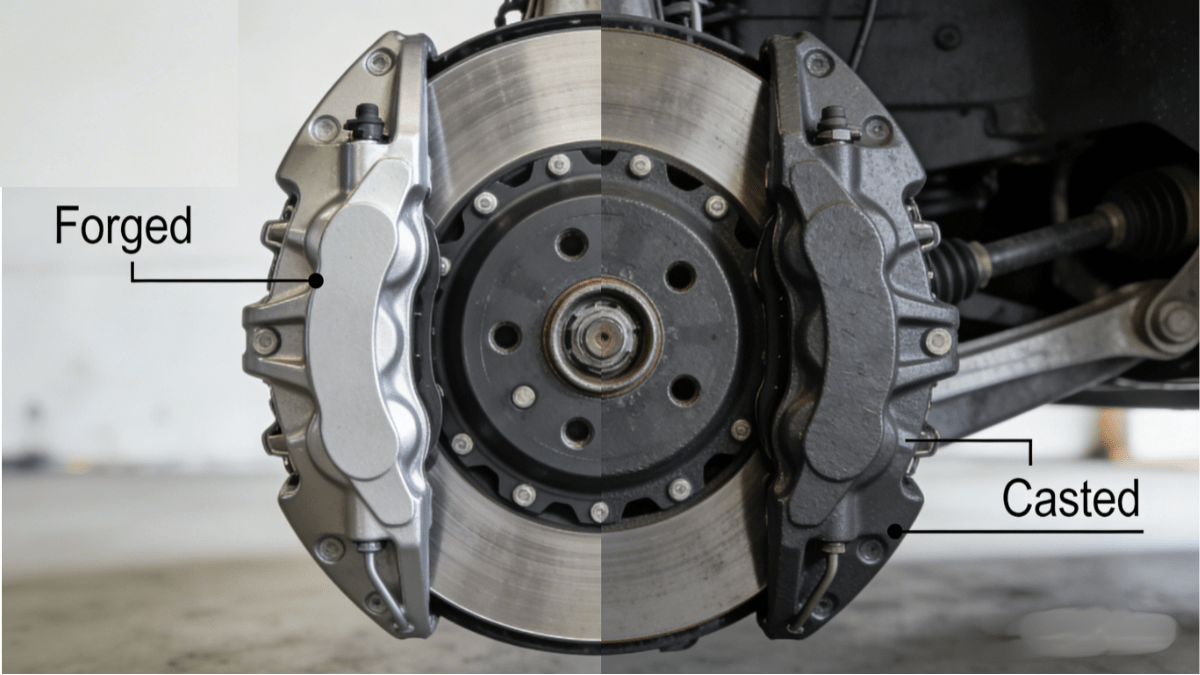
Material selection and manufacturing technology significantly influence the strength, weight, and durability of brake calipers. The two most common manufacturing methods used in the automotive industry are casting and forging.
Cast brake calipers are widely used in standard passenger vehicles due to their cost efficiency and production scalability. However, forged aluminum brake calipers offer higher structural strength and reduced weight, making them more suitable for performance vehicles and racing applications where braking performance and weight reduction are critical factors.
To learn more about the advantages and differences between these manufacturing processes, read:
If you want to understand how brake calipers are produced in modern manufacturing facilities, the following guide explains the full production workflow:
Brake Caliper Manufacturing Process
Technical Insights for Automotive Brake System Buyers
For automotive distributors, brake system brands, and vehicle manufacturers, understanding brake caliper technology is essential when evaluating braking products or selecting manufacturing partners.
Best Brake Calipers for Performance Cars
OEM vs Aftermarket Brake Calipers
How to Choose a Brake Caliper Supplier
Explore Brake Caliper Products
Explore our brake caliper product categories:
Performance Race Brake Calipers
OEM Brake Calipers
For OEM brake caliper manufacturing or private label projects: