



Contact Our Brake Caliper Team
Looking for high-performance brake calipers or custom brake solutions? Contact us directly for product details, pricing, and technical support.
Mob: +86 15730082398
WhatsApp: +852 98566946
Email: Angelia@benmagroup.com


Brake Caliper Heat Dissipation Technology in Modern Performance Braking Systems
Heat management is one of the most critical engineering challenges in modern braking systems. When a vehicle decelerates, the braking system converts kinetic energy into thermal energy through friction between the brake pads and brake rotor. As braking force increases, large amounts of heat are generated in a very short period of time.
In high-performance vehicles, sports cars, and motorsport applications, braking temperatures can exceed 500°C. Without proper heat dissipation, this thermal energy can lead to brake fade, reduced braking efficiency, and premature wear of braking components.
For this reason, modern performance brake calipers are engineered not only to deliver strong clamping force but also to effectively manage heat transfer throughout the braking system.

Why Heat Dissipation Matters in Brake Systems
- Prevents brake fade during repeated braking
- Maintains stable hydraulic pressure
- Protects brake fluid from boiling
- Improves braking consistency
- Extends brake pad and rotor lifespan
How Heat Is Generated During Braking
When the driver presses the brake pedal, hydraulic pressure pushes the pistons inside the brake caliper outward. These pistons force the brake pads against the spinning rotor surface. The friction created between the pads and rotor slows the vehicle but simultaneously generates heat.
The amount of heat produced depends on several factors:
- Vehicle speed
- Vehicle weight
- Brake pad material
- Rotor diameter
- Brake caliper design
High-performance vehicles frequently use multi-piston calipers to distribute braking pressure evenly. Our guide on 4 piston vs 6 piston brake calipers explains how piston configuration influences braking efficiency and heat distribution.
Heat Transfer Path in Brake Systems
The braking system dissipates heat through multiple components working together. During heavy braking, heat travels through the following path:
- Brake pads
- Brake rotor
- Brake caliper body
- Wheel airflow
Brake rotors usually absorb most of the thermal load, but the brake caliper must still manage heat transferred through the brake pads and pistons.
Cooling Design in Performance Brake Calipers
Modern performance brake calipers incorporate several design features to improve heat dissipation and maintain braking stability.
Aluminum Caliper Construction
Most high-performance brake calipers are made from aluminum alloys. Aluminum offers excellent thermal conductivity while remaining lightweight. This helps transfer heat away from the brake pads and pistons more efficiently.
Forged aluminum calipers are particularly effective because the forging process produces a denser and stronger metal structure. You can learn more in our engineering comparison of forged vs cast brake calipers.
Open Caliper Structures
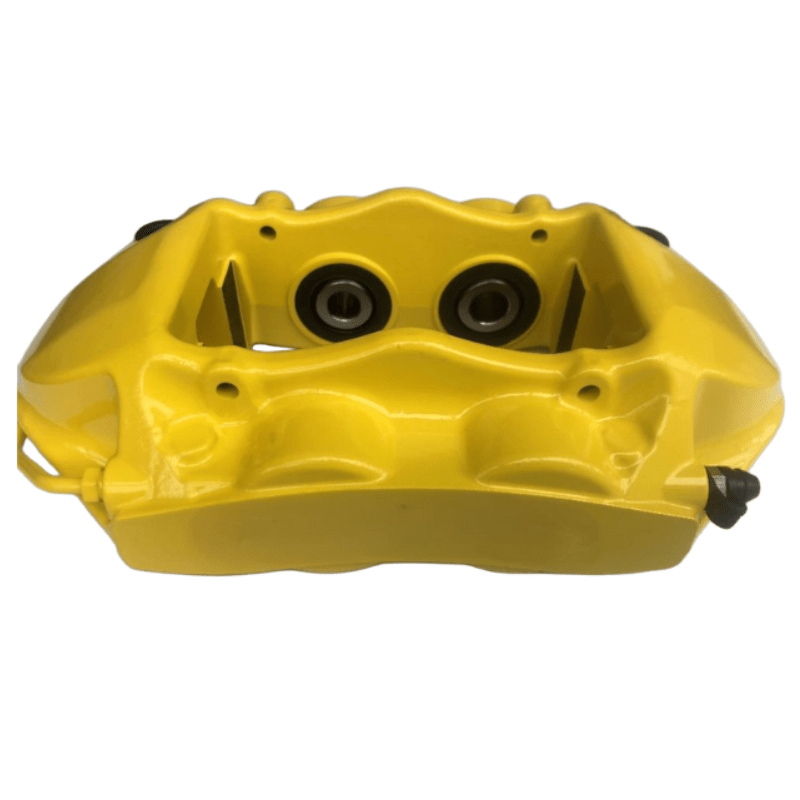
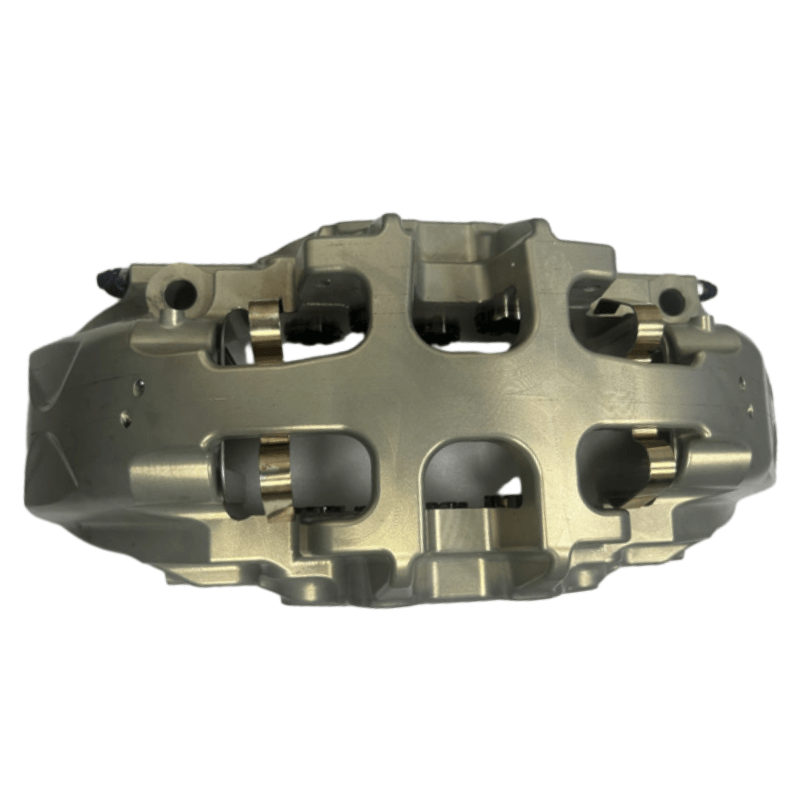
Many motorsport brake calipers feature open bridge designs that allow airflow to circulate around the brake pads. Increased airflow accelerates cooling and prevents excessive temperature buildup.
Multi-Piston Heat Distribution
Multi-piston calipers distribute clamping force evenly across the brake pad surface. This balanced pressure reduces localized overheating and ensures consistent braking performance.
Brake Rotor and Pad Cooling
Brake rotors play a major role in heat dissipation. Ventilated rotors allow air to pass through internal cooling channels, helping remove heat from the braking system.
Performance brake systems often use larger rotors and multi-piston calipers together. These systems are commonly referred to as big brake kits.
Our article on the big brake kit development case study explains how calipers, rotors, and brackets are engineered as a complete braking system.
Manufacturing Quality and Thermal Stability
The heat resistance of a brake caliper is influenced not only by design but also by manufacturing precision. High-quality brake calipers require advanced CNC machining, precision piston bores, and strict quality control.
Professional brake manufacturers also perform pressure testing and thermal testing to ensure braking reliability.
To better understand these processes, read our detailed guide on the brake caliper manufacturing process.
Brake Caliper Buyer Considerations
Automotive distributors and performance brands sourcing brake calipers should consider several important factors when evaluating suppliers.
- Engineering capability
- Manufacturing quality control
- Production capacity
- Material quality
- Experience with performance brake systems
Our professional guide on how to choose a brake caliper supplier explains how industry buyers evaluate manufacturers.
Recommended Brake Caliper Guides
- Forged vs Cast Brake Calipers
- 4 Piston vs 6 Piston Brake Calipers
- OEM vs Aftermarket Brake Calipers
- Brake Caliper Manufacturing Process
- Best Brake Calipers for Performance Cars
Explore Brake Caliper Products
If you are sourcing braking components for automotive distribution or performance upgrades, explore our product range.
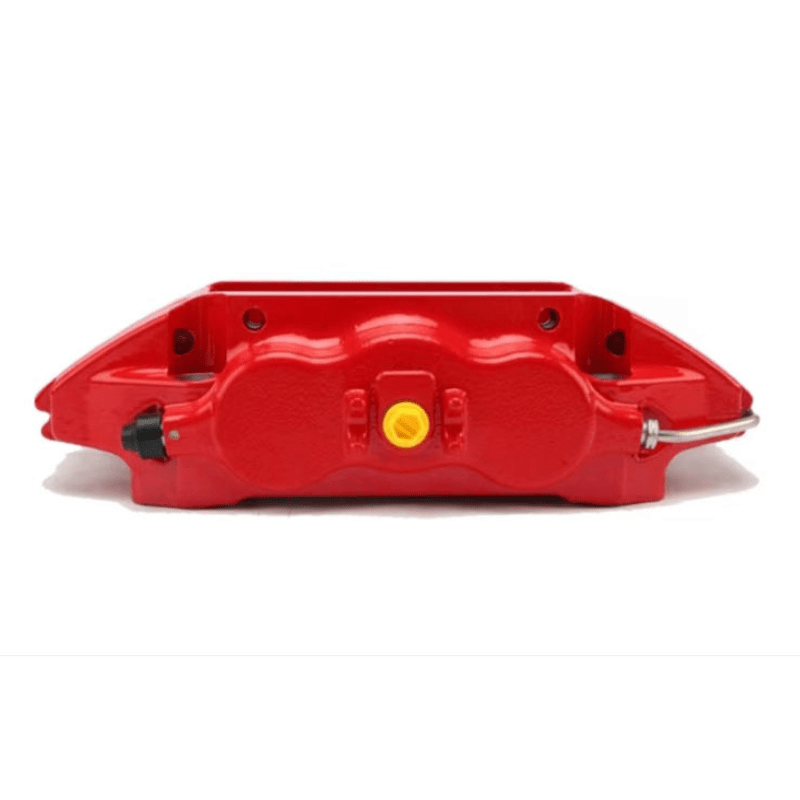
Race Brake Calipers – Multi-piston calipers designed for performance vehicles.
OEM Brake Calipers – Reliable replacement calipers for the global aftermarket.
Looking for a Reliable Brake Caliper Manufacturer?
We supply high-performance brake calipers, big brake kits, and OEM brake components for automotive distributors and performance brands worldwide.
Request a QuoteBrake Caliper FAQs
What causes brake fade?
Brake fade occurs when excessive heat reduces the friction efficiency between the brake pads and rotor. Proper heat dissipation helps prevent this issue.
Why do performance cars use aluminum brake calipers?
Aluminum calipers are lighter and transfer heat more efficiently than traditional materials.
Do bigger brake calipers improve cooling?
Larger calipers usually work together with larger rotors to improve braking power and thermal stability.


