



Contact Our Brake Caliper Team
Looking for high-performance brake calipers or custom brake solutions? Contact us directly for product details, pricing, and technical support.
Mob: +86 15730082398
WhatsApp: +852 98566946
Email: Angelia@benmagroup.com


Brake Caliper Materials Guide: Aluminum vs Cast Iron Calipers
Material selection is one of the most important factors in brake caliper engineering. The material used in a brake caliper affects not only structural strength but also weight, heat dissipation capability, corrosion resistance, and manufacturing cost. Automotive manufacturers and brake system suppliers carefully select materials based on vehicle performance requirements, safety regulations, and cost considerations.
In modern braking systems, the most common brake caliper materials are cast iron and aluminum alloys. Each material has specific advantages depending on the intended application, vehicle type, and performance expectations.
Why Brake Caliper Material Matters
During braking, brake calipers are exposed to extreme mechanical and thermal loads. The friction between brake pads and rotors generates large amounts of heat, while hydraulic pressure inside the braking system creates significant mechanical stress on the caliper body.
The material used for the caliper must therefore meet several engineering requirements:
- High structural strength to withstand braking pressure
- Thermal resistance to handle heat generated during braking
- Dimensional stability to maintain braking precision
- Corrosion resistance for long-term durability
Cast Iron Brake Calipers
Cast iron has been widely used in automotive brake calipers for decades. It offers excellent durability, high compressive strength, and relatively low manufacturing cost. For many standard passenger vehicles and commercial vehicles, cast iron calipers provide a reliable and cost-effective braking solution.
Another advantage of cast iron is its resistance to wear and deformation under heavy loads. This makes it particularly suitable for vehicles that require robust braking performance over long service intervals.
Aluminum Brake Calipers
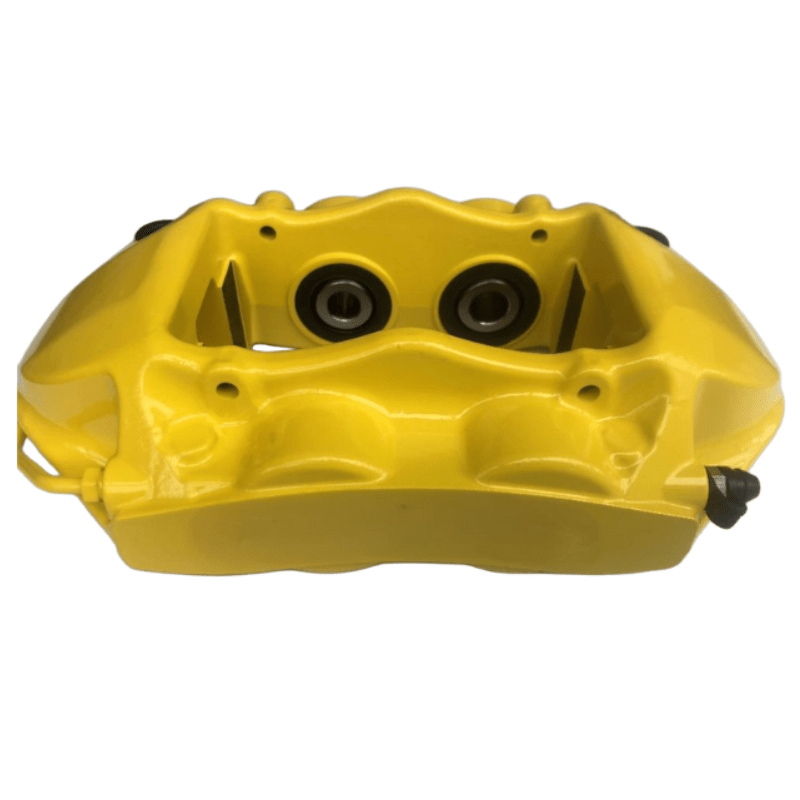
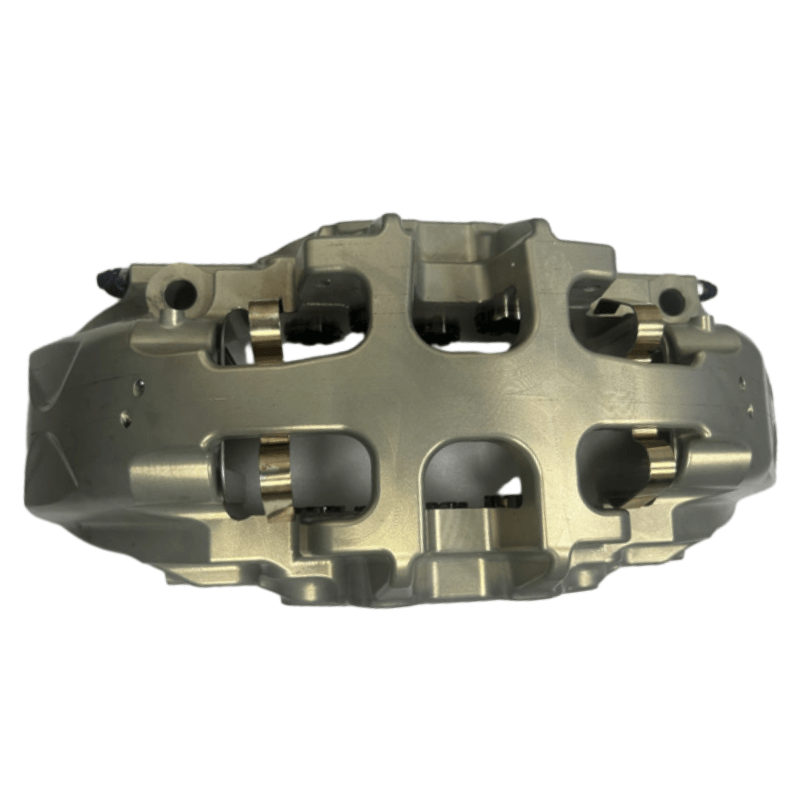
Aluminum alloy brake calipers have become increasingly common in modern vehicles, especially in high-performance and premium segments. Aluminum provides a superior strength-to-weight ratio compared with cast iron, allowing manufacturers to significantly reduce the weight of braking components.
Reducing unsprung mass improves vehicle handling, suspension response, and driving dynamics. As a result, aluminum calipers are widely used in sports cars, racing vehicles, and performance brake systems.
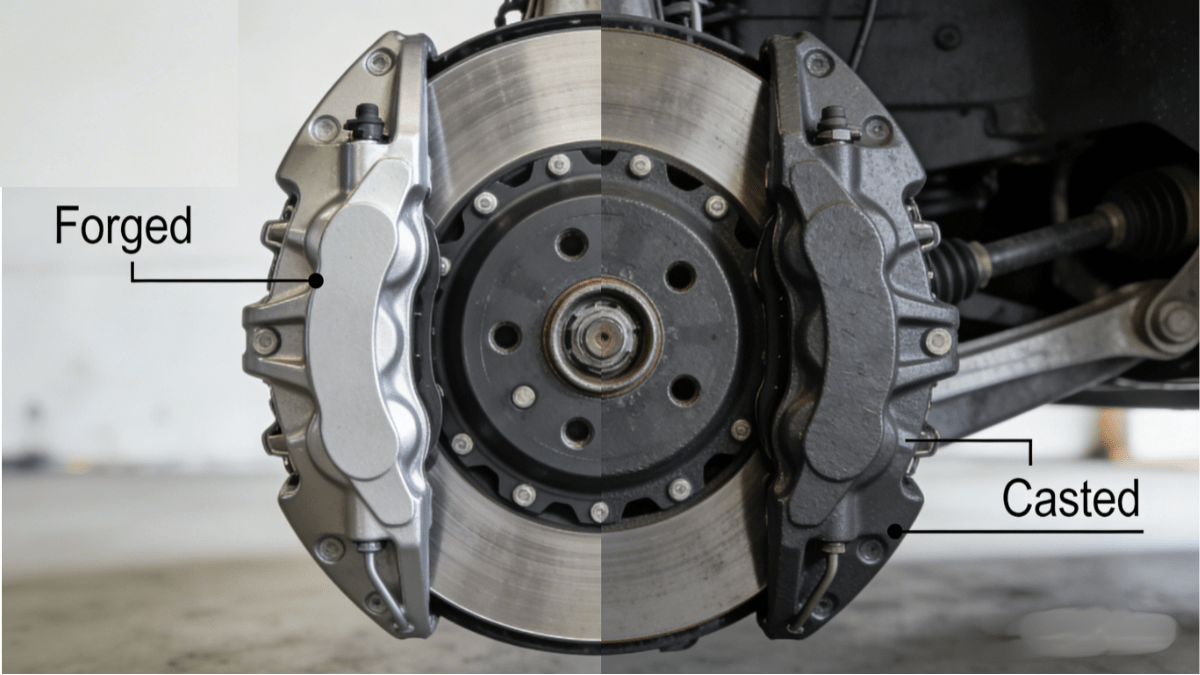
Forged vs Cast Aluminum Calipers
Within aluminum brake calipers, there are different manufacturing processes that influence mechanical properties. Forged aluminum calipers are produced using high pressure forging processes that improve material density and strength. These calipers are commonly used in high-performance brake systems where structural rigidity is critical.
More details about manufacturing differences can be found in our guide on Forged vs Cast Brake Calipers.
Applications in Performance Braking Systems
In motorsport and high-performance automotive applications, brake calipers must deliver consistent performance under extreme conditions. Aluminum calipers with multi-piston configurations are commonly used in these environments because they offer improved heat dissipation and more uniform brake pad pressure distribution.
Multi-piston calipers such as those discussed in 4 Piston vs 6 Piston Brake Calipers are often paired with high-strength aluminum bodies to maximize braking performance.
Material Selection for OEM and Aftermarket Applications
For automotive brands, distributors, and brake component buyers, choosing the correct caliper material depends on the intended vehicle segment and performance goals. OEM passenger vehicles may prioritize durability and cost efficiency, while performance brands often focus on weight reduction and braking stability.
Understanding these material differences allows buyers to make informed decisions when sourcing braking components for new vehicle platforms or aftermarket performance upgrades.
Explore Performance Brake Caliper Solutions
If you are sourcing brake calipers for automotive distribution or developing a performance braking system, explore our performance brake calipers or review our brake caliper engineering case studies.


