
Contact Our Brake Caliper Team
Looking for high-performance brake calipers or custom brake solutions? Contact us directly for product details, pricing, and technical support.
Mob: +86 15730082398
WhatsApp: +852 98566946
Email: Angelia@benmagroup.com


Brake Caliper Manufacturing Process: How Performance Brake Calipers Are Made
Brake calipers are one of the most critical safety components in modern vehicles. They are responsible for converting hydraulic pressure into mechanical clamping force that slows the vehicle by pressing brake pads against the brake rotor.
Because brake calipers operate under extreme conditions—including high temperatures, hydraulic pressure, and repeated mechanical stress—manufacturing them requires advanced engineering and strict quality control.
For automotive distributors and performance brake brands, understanding the brake caliper manufacturing process helps evaluate supplier capabilities and product quality.
This guide explains the complete manufacturing process used by professional brake caliper manufacturers, from raw material selection to final product testing.

Overview of Brake Caliper Manufacturing
Modern brake calipers are typically manufactured using aluminum alloys due to their excellent strength-to-weight ratio and corrosion resistance.
The production process involves several precision manufacturing stages designed to ensure structural strength, dimensional accuracy, and reliable hydraulic performance.
The main production stages include:
- Raw material preparation
- Forging or casting
- CNC precision machining
- Surface finishing and anodizing
- Assembly and sealing
- Hydraulic pressure testing
- Quality inspection
Each stage plays an important role in ensuring the brake caliper performs reliably in real-world driving conditions.
Step 1: Raw Material Selection
The manufacturing process begins with the selection of high-quality aluminum alloys. Performance brake calipers typically use aerospace-grade aluminum alloys because they provide excellent mechanical strength while remaining lightweight.
Material selection is critical because the caliper must withstand both hydraulic pressure and high braking temperatures.
Using low-quality materials can lead to deformation, reduced braking efficiency, and even component failure under extreme driving conditions.
Step 2: Forging or Casting the Caliper Body
After selecting the raw material, the next stage is forming the brake caliper body. Manufacturers typically use either forging or casting processes.
Forged brake calipers are produced by applying extremely high pressure to heated aluminum blocks, shaping them into the desired caliper structure.
This process compresses the metal grain structure, increasing strength and resistance to deformation.
Alternatively, some brake calipers are produced using casting techniques, where molten aluminum is poured into molds to create the caliper body.
While casting is more cost-effective, forged calipers generally offer superior structural strength and durability.
Learn more about this topic in our article on forged vs cast brake calipers.
Step 3: CNC Precision Machining
Once the basic caliper shape has been formed, the component undergoes precision CNC machining.
CNC machining is used to create the highly accurate internal channels and mounting surfaces required for brake system performance.
This stage typically includes:
- Piston bore machining
- Brake pad mounting slots
- Hydraulic fluid channels
- Mounting bracket interfaces
- Threaded ports for brake lines
Precision machining ensures that the pistons move smoothly inside the caliper housing and that hydraulic pressure is distributed evenly during braking.
Step 4: Surface Treatment and Anodizing
After machining, brake calipers undergo surface treatment to improve corrosion resistance and appearance.
One of the most common finishing processes for performance brake calipers is anodizing.
Anodizing creates a protective oxide layer on the aluminum surface that improves durability and corrosion resistance while allowing manufacturers to produce a wide range of colors.
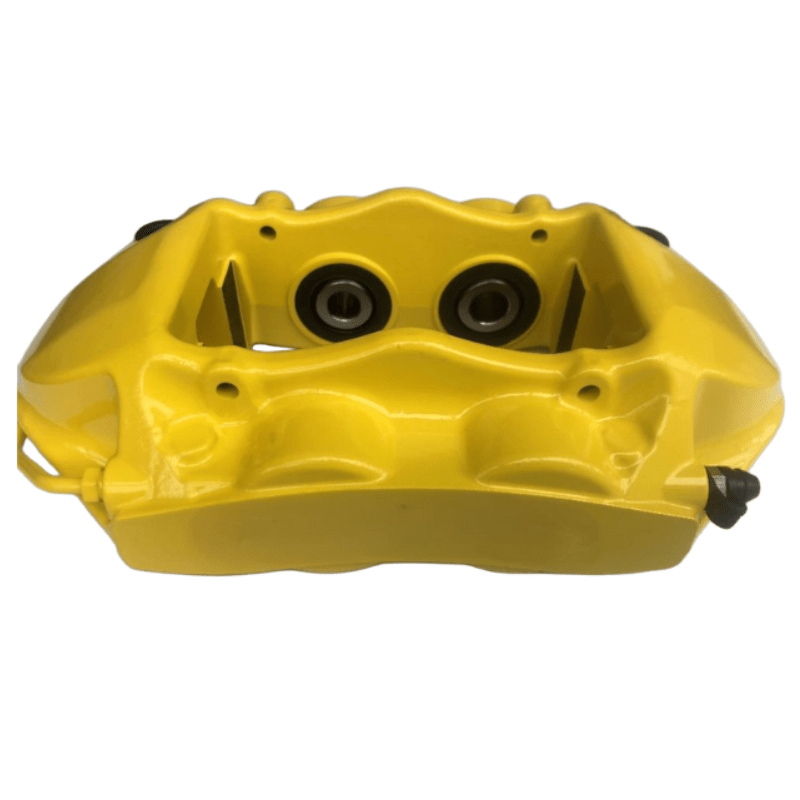
Custom anodized brake calipers are particularly popular among performance car enthusiasts and motorsport teams.
Learn more about this process in our article on custom color anodized brake calipers.
Step 5: Assembly of Internal Components
After the caliper body has been machined and finished, the internal components are installed.
These components include:
- Brake pistons
- Hydraulic seals
- Dust boots
- Bleeder valves
- Brake pad retention hardware
Each component must be carefully installed to ensure proper hydraulic operation and prevent fluid leakage.
The piston design also plays an important role in braking performance. Multi-piston brake calipers distribute clamping force more evenly across the brake pads.
Learn more about this in our comparison of 4 piston vs 6 piston brake calipers.
Step 6: Hydraulic Pressure Testing
Once the brake caliper is fully assembled, it undergoes hydraulic pressure testing.
This testing simulates real braking conditions by applying hydraulic pressure to the caliper while checking for leaks, deformation, or seal failure.
Manufacturers test calipers at pressures significantly higher than normal operating conditions to ensure safety margins.
Only calipers that pass these pressure tests proceed to final quality inspection.
Step 7: Quality Control and Final Inspection
Quality control is a critical part of brake caliper manufacturing.
Professional manufacturers implement multiple inspection stages to ensure every caliper meets strict safety and performance standards.
Typical inspection procedures include:
- Dimensional measurement using precision tools
- Surface finish inspection
- Hydraulic leak testing
- Visual inspection
- Packaging verification
Reliable suppliers maintain strict quality management systems to ensure consistent product performance.
For automotive distributors, selecting manufacturers with strong quality control systems is essential when sourcing brake components.
Recommended Brake Caliper Knowledge
Brake Caliper Technology
- Brake Caliper Heat Dissipation Technology
- Brake Caliper Structural Rigidity and Strength
- Brake Caliper Materials
- Brake Caliper Piston Design
- Brake Caliper Design Engineering
Brake Caliper Buyer Guides
- Best Brake Calipers for Performance Cars
- Forged vs Cast Brake Calipers
- 4 Piston vs 6 Piston Brake Calipers
- OEM vs Aftermarket Brake Calipers
- How to Choose a Brake Caliper Supplier
- Brake Caliper Manufacturing Process
Brake Caliper Development Cases
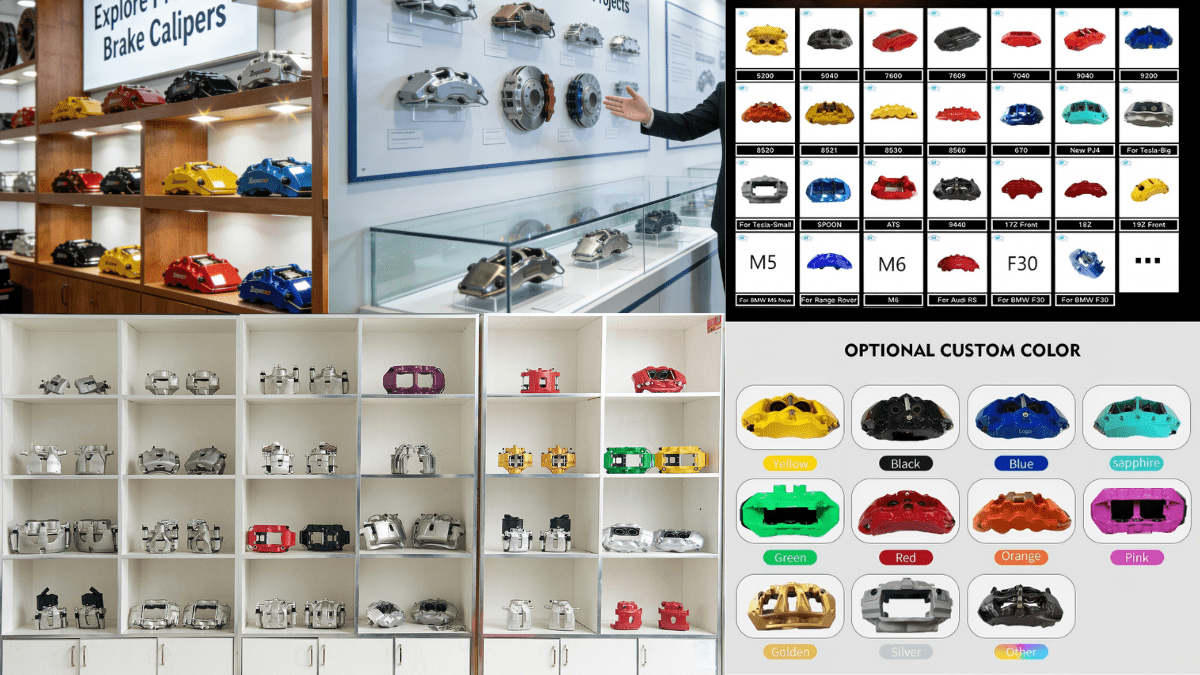
Explore Brake Caliper Products
If you are sourcing braking components for automotive distribution or performance upgrades, explore our product catalog.
Looking for a Reliable Brake Caliper Manufacturer?
We supply high-performance brake calipers, OEM brake components, and custom big brake kits for automotive distributors and performance brands worldwide.
Request a QuoteBrake Caliper Manufacturing FAQs
What materials are used to manufacture brake calipers?
Most modern brake calipers are made from high-strength aluminum alloys because they provide an excellent balance between strength, weight reduction, and corrosion resistance.
Why are forged brake calipers stronger than cast calipers?
Forging compresses the metal grain structure, producing a denser material that is more resistant to deformation under hydraulic pressure.
Why is CNC machining important for brake calipers?
CNC machining ensures precise dimensions for piston bores and hydraulic channels, which is essential for consistent braking performance.