
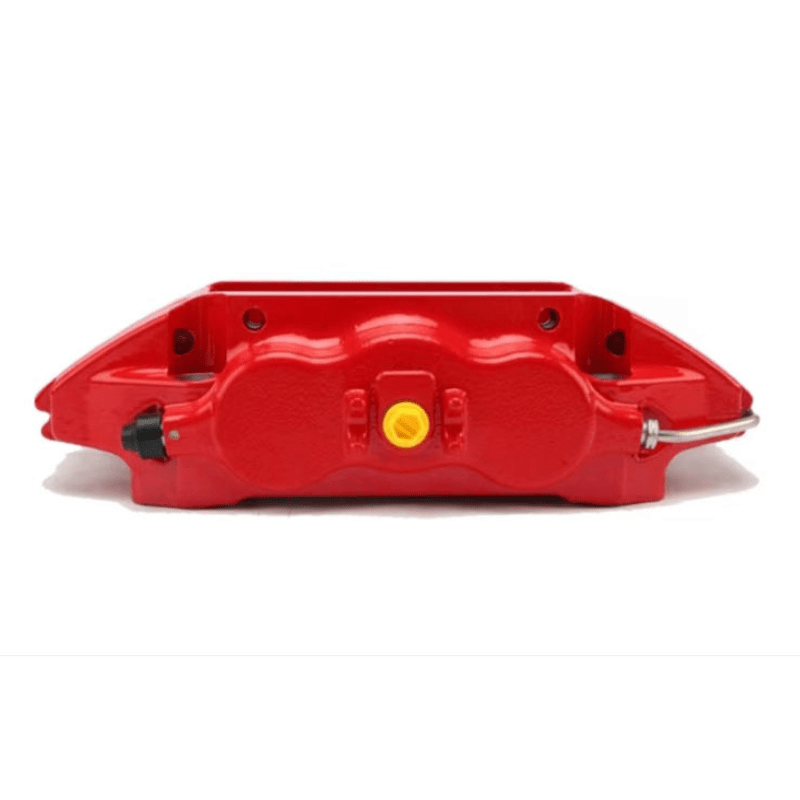
Contact Our Brake Caliper Team
Looking for high-performance brake calipers or custom brake solutions? Contact us directly for product details, pricing, and technical support.
Mob: +86 15730082398
WhatsApp: +852 98566946
Email: Angelia@benmagroup.com


Forged vs Cast Brake Calipers: Manufacturing, Strength and Performance Differences
Brake calipers are one of the most critical components in modern automotive braking systems. They convert hydraulic pressure from the braking system into mechanical clamping force that presses brake pads against the brake rotor. This process allows vehicles to slow down and stop safely.
When evaluating brake calipers for performance vehicles or aftermarket braking systems, one of the most common comparisons is between forged brake calipers and cast brake calipers. These two manufacturing methods significantly influence the strength, weight, durability, and overall performance of braking components.
For automotive distributors, performance brands, and motorsport engineers, understanding the differences between forged and cast calipers is essential for selecting the right braking solution.
This guide explains the manufacturing processes behind forged and cast brake calipers, their structural differences, performance characteristics, and how professional buyers evaluate these braking components.
What Are Forged Brake Calipers?
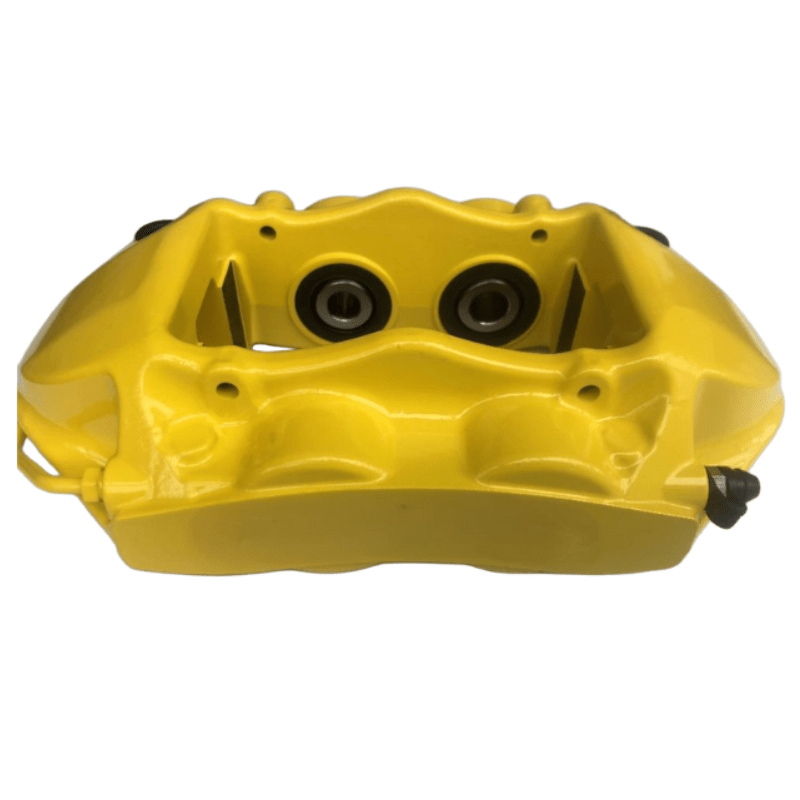
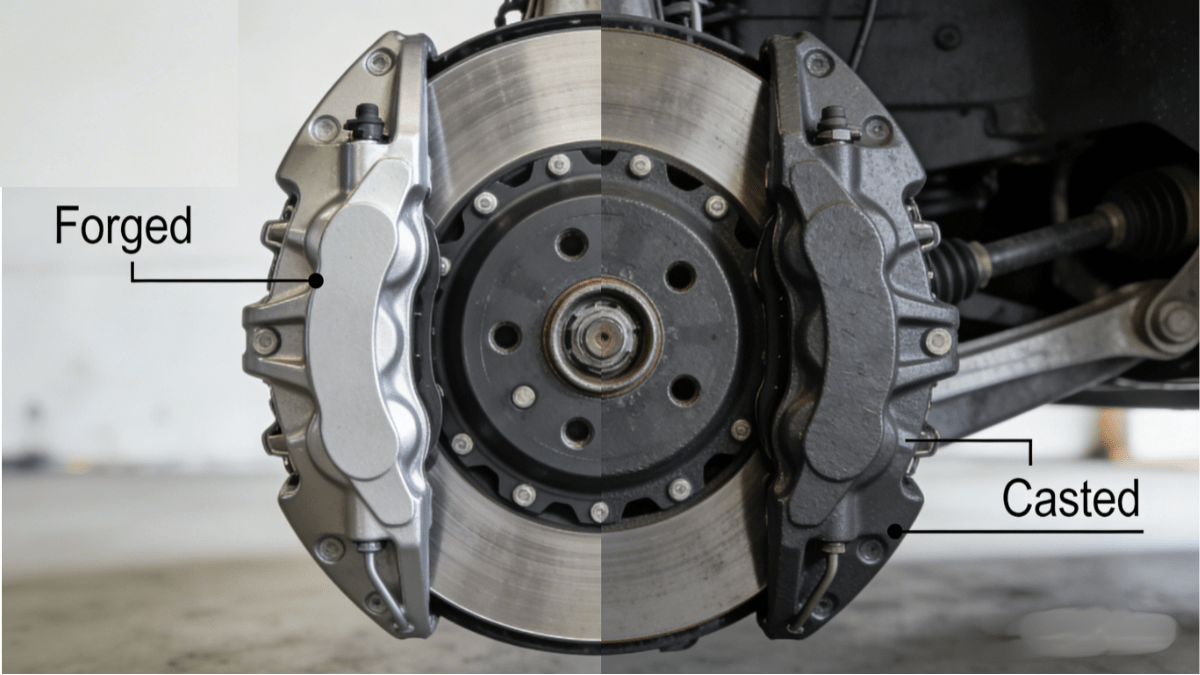
Forged brake calipers are manufactured using a metal forging process in which aluminum alloy billets are compressed under extremely high pressure to form the caliper body. During forging, the metal grain structure becomes more compact and aligned, significantly improving mechanical strength.
This manufacturing technique produces brake calipers that are lighter yet stronger than many cast alternatives. Forged aluminum calipers are commonly used in high-performance braking systems, motorsport applications, and premium aftermarket upgrades.
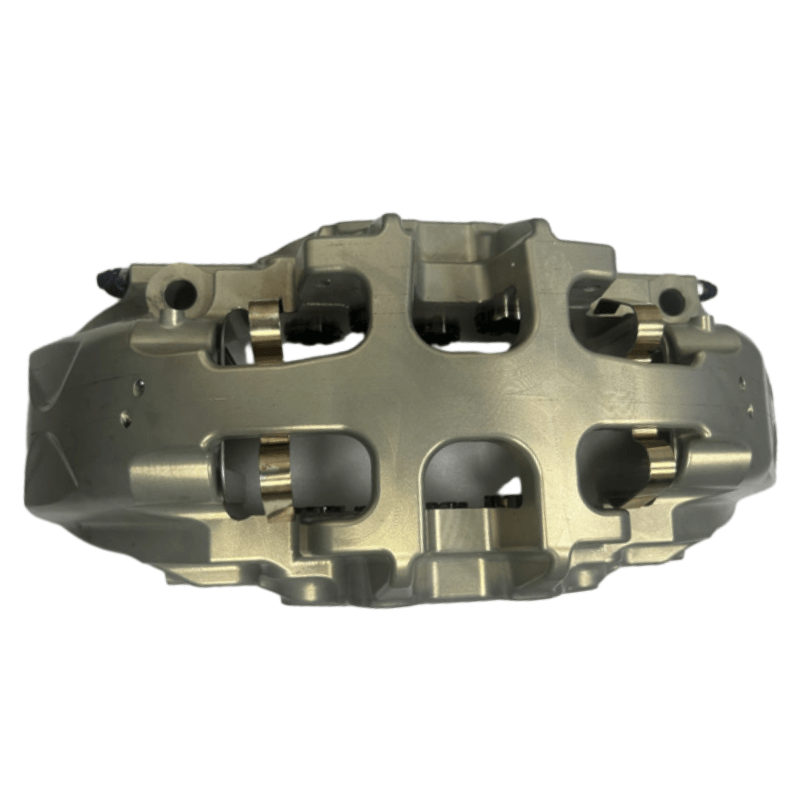
After forging, the caliper body typically undergoes precision CNC machining to create piston bores, mounting surfaces, and fluid channels with extremely tight tolerances.
Advantages of Forged Brake Calipers
- Higher structural strength due to dense metal grain structure
- Improved resistance to deformation under hydraulic pressure
- Lighter weight compared with many cast designs
- Better durability for high-performance braking systems
- Superior structural rigidity for consistent braking response
What Are Cast Brake Calipers?
Cast brake calipers are manufactured by pouring molten aluminum or iron into a mold where the metal cools and solidifies into the desired shape. Casting is one of the most widely used manufacturing processes in the automotive industry because it allows manufacturers to produce complex shapes efficiently and at lower production costs.
Most standard passenger vehicles use cast brake calipers because they provide adequate performance for daily driving while maintaining cost efficiency.
After the casting process, the caliper body is also machined to achieve the required precision for piston movement and brake pad alignment.
Although cast calipers are widely used in OEM vehicles, they generally have lower structural strength compared with forged designs.
Structural Strength Comparison
The main difference between forged and cast brake calipers lies in the internal metal structure created during the manufacturing process.
Forging compresses the metal grains, producing a dense and uniform structure that increases strength and resistance to cracking. This process allows forged calipers to withstand higher hydraulic pressure and repeated braking loads.
In contrast, casting can introduce microscopic air pockets or irregular grain structures within the metal. While modern casting techniques have improved significantly, forged components generally provide superior mechanical strength.
Structural strength is particularly important in performance braking systems where hydraulic pressures and temperatures are significantly higher than in standard vehicles.
Brake Caliper Structural Rigidity
Structural rigidity is another critical factor influencing braking performance. When brake fluid pushes the pistons outward, the caliper body must remain rigid to convert hydraulic pressure into effective clamping force.
If the caliper housing flexes under pressure, braking efficiency decreases and pedal feel becomes less precise.
Forged brake calipers often provide better structural rigidity due to their denser material structure and optimized design geometry.
You can learn more about this engineering concept in our article on brake caliper structural rigidity and strength.
Weight and Performance Advantages
Weight reduction is an important factor in performance vehicle engineering. Brake calipers contribute to the vehicle’s unsprung weight, which directly affects suspension performance and handling characteristics.
Forged aluminum calipers are typically lighter than cast iron or cast aluminum designs while maintaining higher strength.
Reducing unsprung weight improves suspension response and helps maintain better tire contact with the road surface during aggressive driving.
This is one reason why forged calipers are commonly used in sports cars, racing vehicles, and high-performance aftermarket braking systems.
Heat Resistance and Thermal Stability
Brake systems generate extreme heat during operation. Under aggressive braking conditions, rotor temperatures can exceed several hundred degrees Celsius.
Brake calipers must maintain structural stability under these thermal conditions to ensure consistent braking performance.
Forged calipers often perform better in high-temperature environments because their dense material structure resists thermal deformation more effectively.
Thermal performance is also influenced by caliper design, piston seals, and cooling airflow around the braking system.
Our article on brake caliper heat dissipation technology explains how modern braking systems manage thermal loads.
Manufacturing Process and Precision Machining
Regardless of whether a brake caliper is forged or cast, precision machining is required to achieve the tight tolerances necessary for safe braking operation.
CNC machining ensures that piston bores, brake pad guides, and mounting surfaces meet strict dimensional requirements.
Surface treatments such as anodizing or powder coating are often applied to improve corrosion resistance and enhance the visual appearance of performance brake calipers.
You can learn more about production methods in our guide on the brake caliper manufacturing process.
OEM vs Aftermarket Brake Calipers
Most OEM vehicles use cast brake calipers because they offer sufficient braking performance for everyday driving at lower production costs.
However, aftermarket performance brake systems frequently use forged calipers to achieve higher braking performance and durability.
Many automotive distributors also develop private-label braking systems based on forged caliper designs.
Our comparison of OEM vs aftermarket brake calipers explains these differences in greater detail.
Choosing the Right Brake Caliper for Performance Vehicles
When selecting brake calipers for performance vehicles, several factors should be considered:
- Vehicle weight and power output
- Intended driving conditions (street, track, or motorsport)
- Brake rotor size and compatibility
- Thermal performance requirements
- Manufacturing quality and supplier reliability
Professional buyers often evaluate multiple manufacturers before selecting a brake caliper supplier.
If you are sourcing braking components globally, our guide on how to choose a brake caliper supplier explains the key factors to consider.
Recommended Brake Caliper Knowledge
Brake Caliper Technology
- Brake Caliper Heat Dissipation Technology
- Brake Caliper Structural Rigidity and Strength
- Brake Caliper Piston Design
- Brake Caliper Materials
- Brake Caliper Design Engineering
Brake Caliper Buyer Guides
- Best Brake Calipers for Performance Cars
- Forged vs Cast Brake Calipers
- 4 Piston vs 6 Piston Brake Calipers
- OEM vs Aftermarket Brake Calipers
- How to Choose a Brake Caliper Supplier
- Brake Caliper Manufacturing Process
Brake Caliper Development Cases
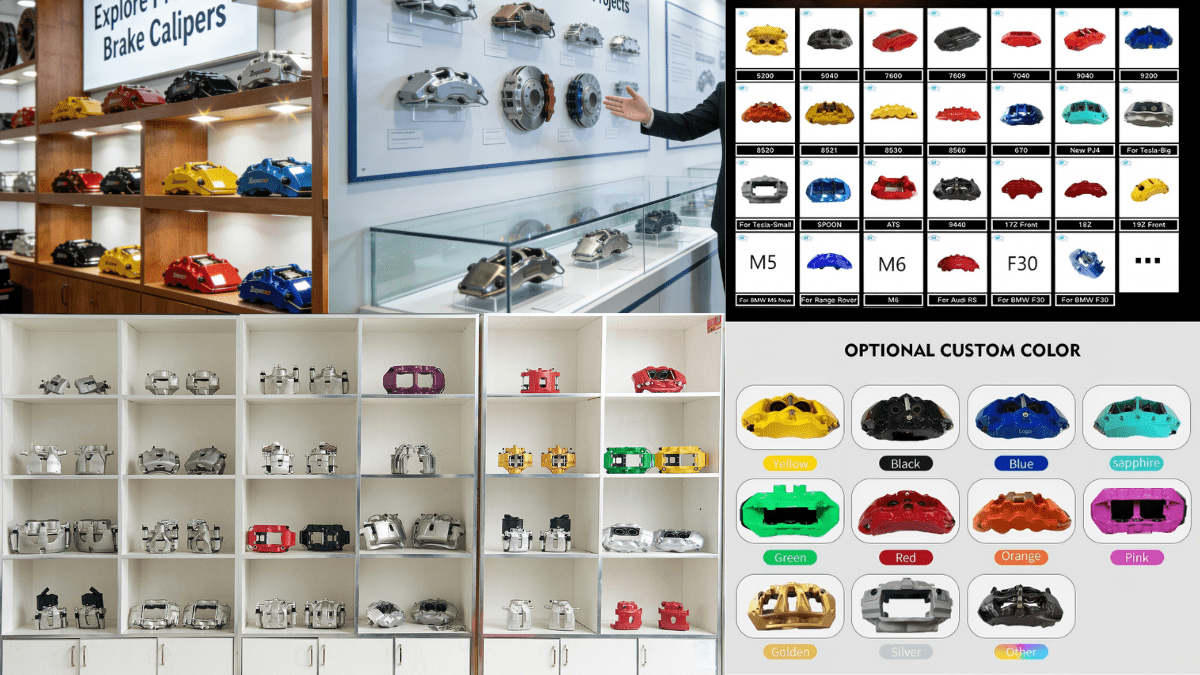
Explore Brake Caliper Products
If you are sourcing braking components for automotive distribution or performance upgrades, explore our product catalog.
Looking for a Reliable Brake Caliper Manufacturer?
We supply high-performance brake calipers, OEM brake components, and custom big brake kits for automotive distributors and performance brands worldwide.
Request a QuoteBrake Caliper FAQs
Are forged brake calipers better than cast calipers?
Forged brake calipers generally offer higher strength, lighter weight, and better structural rigidity, making them ideal for performance vehicles and motorsport applications.
Why do OEM vehicles use cast brake calipers?
Cast brake calipers are more cost-efficient to produce and provide adequate braking performance for standard passenger vehicles.
Do forged calipers improve braking performance?
Yes. Forged calipers typically provide better rigidity and heat resistance, which helps maintain consistent braking performance under heavy loads.